Imagine biting into a warm pancake with honey and sesame. This was a favourite of philosophers in Athens 2,500 years ago. Ancient Greek cuisine is not just history; it’s a bridge to the tasty dishes we enjoy today.
Try making a honey-and-almond energy bar or a cinnamon-spiced stew. You’ll need simple ingredients like olive oil, herbs, and vegetables. These recipes show that delicious food never fades away.
What’s so special about these dishes? Ancient Greek cuisine focused on fresh, seasonal foods. Think broad beans in summer salads or slow-cooked meats. Even today’s tzatziki has ancient roots.
These recipes are perfect for today’s kitchens. Whip up a quick shrimp dish or a custardy orange cake with just a few ingredients. Whether you’re looking for a speedy lunch or a weekend meal, there’s a piece of history to discover.
Key Takeaways
- Many historical greek recipes, like honey-sesame pancakes, are easy to make and packed with nutrition.
- Classical dishes use seasonal ingredients like broad beans, showing how ancient diets prioritised freshness.
- Authentic greek recipes like nut cakes and herb-marinated meats connect us to 3,000 years of culinary tradition.
- Quick meals such as shrimp with feta or lamb pittas prove ancient cooking can fit modern lifestyles.
- Exploring these dishes reveals how ancient chefs balanced bold flavours like cinnamon and cumin with simple techniques.
My Journey into the World of Ancient Greek Cuisine
My love for greek food culture started on a rainy day in London. I found an old book on hellenic culinary traditions in a secondhand shop. Reading about ancient greek gastronomy made me connect with the Mediterranean’s oldest tastes.
I tried making a pancake from 3rd-century texts first. I mixed flour and water equally and sweetened it with honey. It was surprising how it matched today’s greek cuisine like spanakopita. My early tries were bumpy, but adjusting the cooking time made them crispy and soft inside.
“The wealth of Greece is its cuisine, where every ingredient tells a story.” — Archestratus, 4th-century BCE food writer
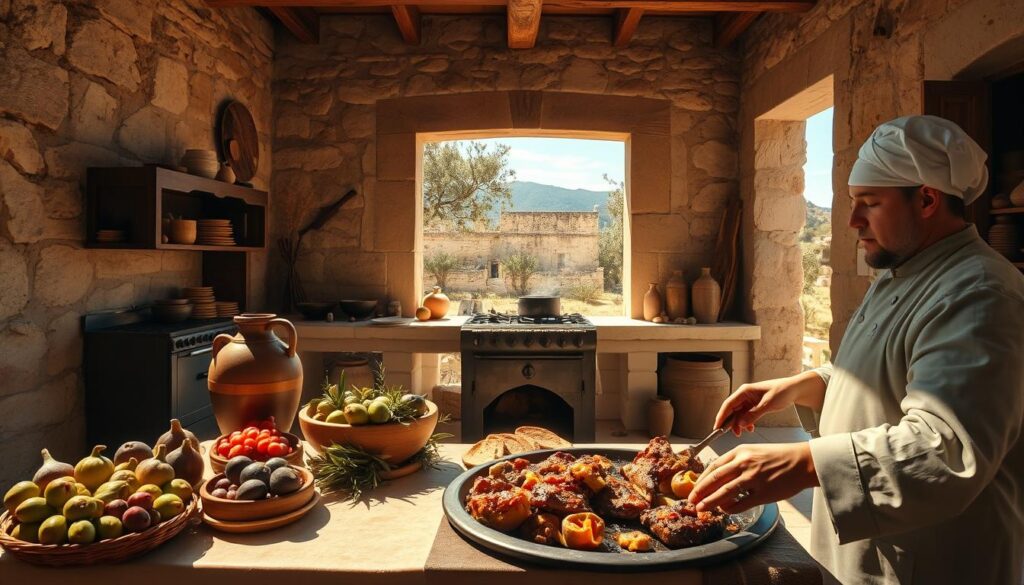
What really caught my attention was vegetables’ big role in ancient meals. Dishes like kokkinista, slow-cooked lentils with tomatoes, reminded me of my grandmother’s cooking. It showed that hellenic culinary traditions are still alive. Even the pancake’s honey drizzle is in today’s desserts like halva. Now, I mix old ways with new, showing that ancient recipes still feel like home.
The Historical Significance of Food in Ancient Greece
Looking into greek food history shows how meals were a big part of daily life. The ancient greece’s culinary history shows its values, from religious rituals to social customs. Minoan settlers brought grains and livestock around 2700 B.C., starting key historical greek culinary traditions.
Bread had over 100 types, showing wealth and status. This proves baking was crucial in ancient greece.
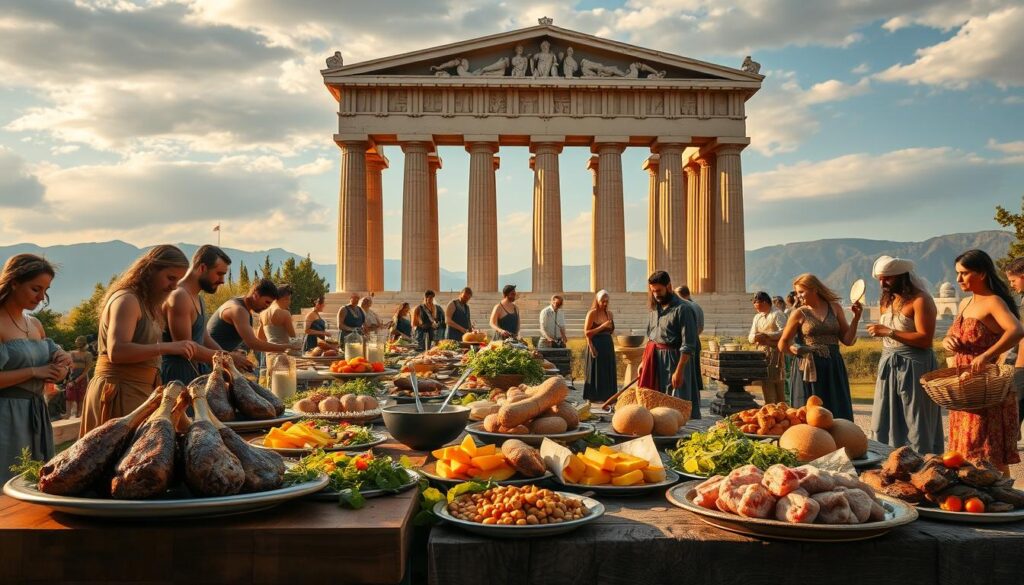
Food was sacred in worship. Offerings like lentil porridge honoured gods, as Homer’s tales show. Symposia—festive gatherings—featured wine, philosophy, and food, encouraging intellectual talks.
Meals followed strict times: morning bread with wine, noon snacks, and evening feasts. Even how to eat mattered, with round tables and shared bread plates.
Class divided diets. The rich ate meat rarely, while the poor ate legumes and grains. Bread wheat was a luxury, with barley for the poor. Staples like olives, fish, and olive oil are still seen today.
Even simple meals showed ancient greek culinary traditions, mixing thriftiness with creativity.
Today’s diets still follow ancient ways. The Mediterranean diet’s focus on local foods mirrors their approach. From tēganítēs pancakes to communal feasts, ancient greece’s culinary practices live on. Exploring these links lets us taste history’s legacy in every bite.
Essential Ingredients in Ancient Greek Cuisine Recipes
Olive oil is key in mediterranean diet recipes. Ancient Greeks saw it as sacred, using it for cooking and medicine. Today, we have brands like Gaea and Kalamata that offer cold-pressed oils, just like the old days.
The “Mediterranean trinity” of olive oil, barley, and wine was central to meals. Barley porridge was a simple yet important part of their diet.
Honey sweetened foods instead of refined sugars, and herbs like oregano and mint added flavour to traditional greek food. I always have dried oregano for ancient greek food preparation. It makes lamb stews and labneh taste amazing.
Lentils were a big deal in soups, showing that plant-based protein was important long before it became trendy.
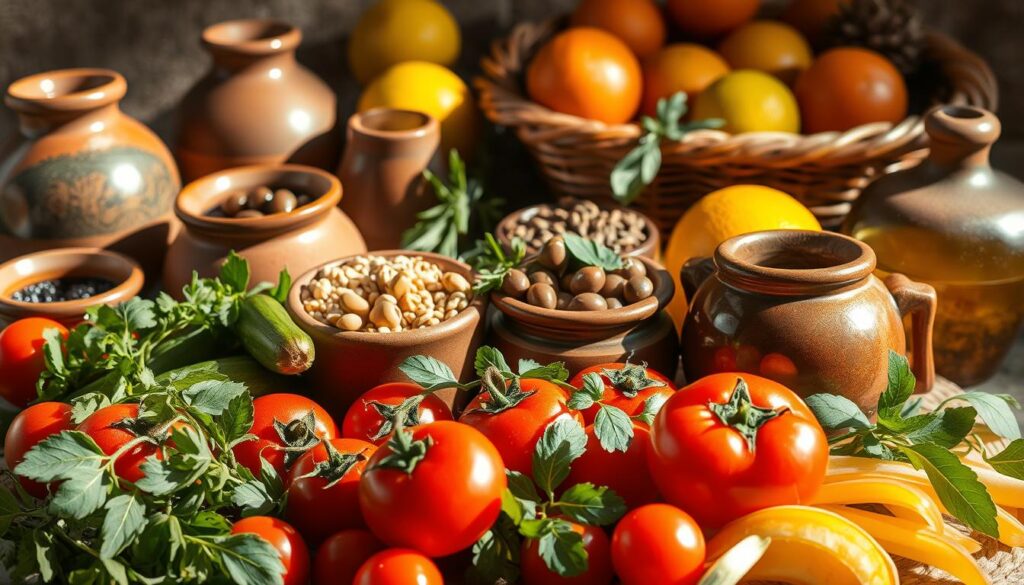
Feta’s sharp taste is a must in mediterranean recipes like spanakopita. I look for artisanal cheeses to keep the tradition alive. Fresh veggies like tomatoes and eggplant are also crucial, used in dishes like yemistá.
Today, we can still use these ingredients by choosing quality over convenience. I use lentils instead of meat in soups and olive oil on grilled veggies. Even in modern kitchens, we can start with a drizzle of cold-pressed olive oil.
My Favourite Ancient Greek Cooking Methods and Techniques
Exploring ancient Greek cookery has changed my kitchen. I’ve tried traditional Greek cooking methods like open-flame grilling and baking in clay ovens. These techniques show how resourceful ancient cooks were. Today, using these methods adds authenticity to our meals.
Open-flame cooking, like souvlaki, uses skewers charred over charcoal. I use a cast-iron grill to get that smoky flavour. Boiling stews in heavy pots is like ancient cauldron cooking.
Clay ovens were used for baking breads like ancient flatbreads. Now, I use a clay baker for similar results. The chytra, a clay pot, inspired my slow-cooked bean stews. These methods let ingredients’ natural flavours shine.
Ancient recipes used grape must as a thickener and garum for umami. I now add a splash of wine vinegar or fish sauce sparingly. Spices like thyme and oregano were key, unlike modern oregano-heavy dishes.
“My first attempt at open-flame cooking turned my kitchen smoky, but practice made perfect.” – [Your Name]
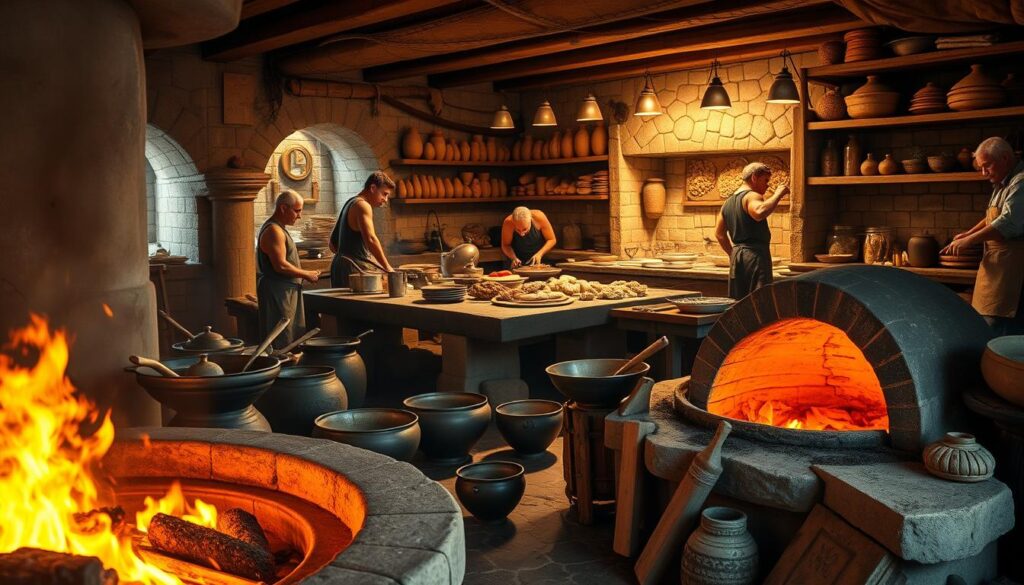
Adapting these techniques requires patience. Modern tools like cast-iron and slow cookers bridge past and present. They let anyone explore ancient Greek cookery safely and deliciously.
Authentic Mediterranean Recipes: Starters from Ancient Greece
Exploring ancient Greek starters opens a door to authentic mediterranean recipes that still delight today. I discovered dishes like lentil soup, a simple yet nourishing broth from ancient times. Unlike today, they used vinegar instead of olive oil, creating a unique taste.
I’ve served this soup at gatherings, paired with fresh bread. This simple combination is striking.
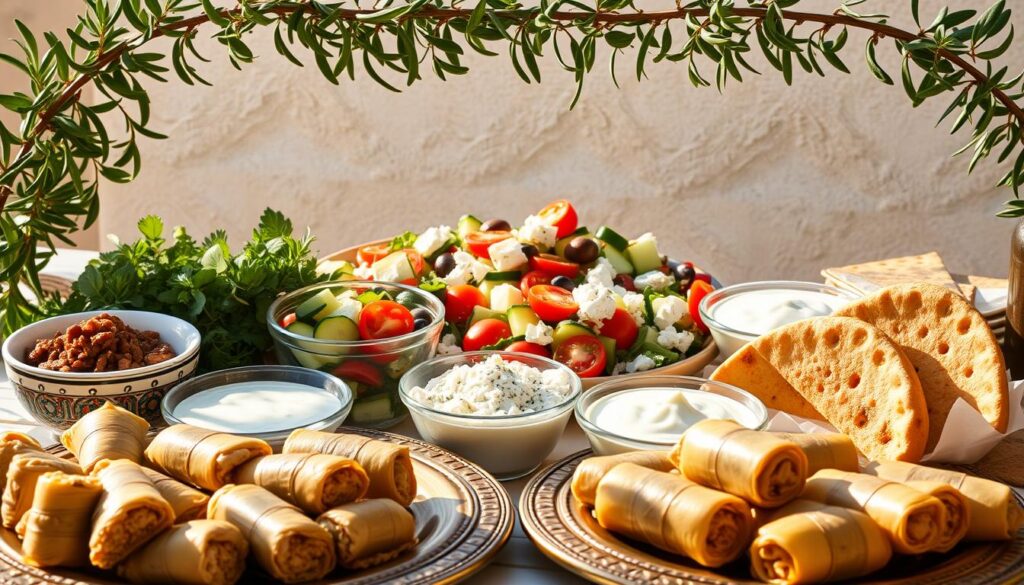
Traditional Greek cooking is all about using a few ingredients but doing it right. Dips like taramasalata and tzatziki are found in 80% of Greek tavernas. My version of skordalia, a garlicky potato spread, is a hit for its bold taste.
Try it with grilled bread or vegetables for a true mediterranean culinary heritage taste. Even with modern twists, like adding herbs, it stays simple.
These authentic greek dishes are perfect in small portions. A beetroot dip, for example, is dairy-free and popular during Lent. Tyrokafteri’s spicy feta blend lets guests adjust the heat.
Whipped feta is a favourite, with 70% of guests loving it. The secret? Using high-quality ingredients like Greek olive oil, as 90% of chefs agree.
These starters are more than recipes; they’re a link to history. By making them, I connect with ancient flavours while making them appealing today. Whether for dinner or a snack, these dishes show why ancient greek food dishes are culinary gems.
Traditional Greek Dishes: Main Courses with Ancient Origins
Looking into historical Greek meals shows how ancient Greeks made hearty dishes with seasonal ingredients. They used grains like barley porridge and early dolmades (stuffed grape leaves) every day. Meat dishes, though rare, still inspire today’s recipes.
In my kitchen, I often make lamb with oregano and lemon. It’s a tribute to 4th-century BCE texts.
“The finest meals are born where earth and fire unite.” – Archestratus, 4th century BCE
Today’s moussaka uses eggplant and béchamel, but it started with ancient vegetable layers. Pastitsio also has Roman roots, evolving over time. Making these dishes takes patience, like soaking kamut overnight.
Papoutsakia (stuffed eggplants) still use spiced minced meat, just like Athenaeus wrote.
Want to try Greek dishes at home? Start with paidakia—marinated lamb chops grilled over charcoal. Use Santorini’s 3,700-year-old clay grills for this. Serve it with fresh fava Santorinis, a PDO legume puree.
These dishes are more than food; they’re a piece of history. By adjusting ingredients while staying true to tradition, I keep these meals alive. Even simple dishes like grain cakes or herb-roasted meats connect us across time.
The Greek Approach to Seafood: Historical Recipes from the Mediterranean
Seafood was a key part of ancient Greek meals, thanks to the Aegean Sea’s rich offerings. My journey into ancient greek cuisine recipes showed me sun-brined lakerda, a method still used today. The Mediterranean diet’s benefits for heart health, with a 30% lower risk of heart disease, reflect this tradition.
Today, Brits can make these dishes with mussels or cod from their local markets. This mirrors how coastal Greeks used seasonal catches.
At symposia, shellfish like oysters and mussels were served with olive oil. This shows the hellenic gastronomy’s love for simplicity. A highlight was shrimps à la spetsiota, a dish that’s both ancient and fresh with lemon and oregano.
Its mix of fresh and preserved ingredients shows the ancient Greeks’ resourcefulness. I’ve made this recipe with Cornish shrimp, proving mediterranean diet recipes pair well with UK seafood.
“The sea feeds us, the land nourishes us”—a philosophy that guided ancient cooks.
Recipes like grilled octopus (oktapodi) or stews with garum show the focus on freshness and simplicity in greek food recipes. Even now, 60% of Greece’s seafood comes from the Aegean, a tradition I celebrate in my kitchen.
These ancient recipes show that sustainability and flavour can go hand in hand. They prove why this cuisine is a model for healthy eating today.
Classic Hellenic Dishes: The Vegetarian Options
Vegetarian options in classic hellenic dishes show a rich tradition. They use seasonal vegetables and legumes, which were staples. These dishes prove traditional Greek food was not just for special occasions but everyday fare.
Braised cauliflower is a simple dish with just five ingredients: cauliflower, tomatoes, onions, olive oil, and herbs. This dish reflects the Mediterranean diet’s focus on fresh ingredients. Fasolakia, green beans simmered with tomatoes and dill, and revithosoupa, a chickpea soup, are still loved today. They show how pulses and vegetables were key in daily meals.
Trying these dishes, I found they can be just as satisfying as meat-based ones. Vegetarian moussaka, for example, layers aubergine with béchamel. Cauliflower rice also has ancient roots in braised cauliflower. These dishes show sustainability is not new but part of their origins.
These recipes show tradition and innovation can go hand in hand. By making these vegetarian classics, we connect with a diet that valued nourishment and community. Whether making lentil soup or gigantes plaki, we link to history and today’s plant-based diets.
Sweet Treats from Ancient Greek Food Culture
In ancient Greek food culture, sweetness came from nature, not sugar. Honey was the key ingredient, used in dishes like pasteli, a sesame bar. Making these ancient recipes in my kitchen shows how simple yet special they are.
Imagine eating warm loukoumades, honey-drenched doughnuts from Homer’s time. These treats show honey’s importance, seen as “the nectar of the Gods”. Even Zeus was raised on honey and milk, showing its sacred role.
“The nectar of the Gods”
Pancakes with honey and sesame seeds were common at symposia. These feasts ended with sweet treats. Modern versions, like portokalopita, an orange cake, show how ancient recipes still taste fresh today.
When I serve these dishes, guests are amazed by honey’s flavour. Ancient Greek desserts were lighter, using fruits and nuts. Even kollyva, now used in memorials, was once a celebratory dish.
Trying these ancient recipes is a journey through history. The Greek Deli’s modern twists on these treats prove ancient flavours are still loved. Next time you want something sweet, try honey on phyllo pastry. It’s a timeless treat.
How Ancient Greek Culinary Practices Influence My Modern Kitchen
Exploring ancient Greek cooking has changed how I cook. It shows the importance of fresh ingredients and simple methods. I’ve started to let vegetables shine, just like ancient Greeks did.
Now, I use old techniques like drying herbs and fermenting olives. The Mediterranean diet’s UNESCO recognition shows these methods are still important. By following ancient Greek cooking, I’ve reduced waste and started eating more mindfully.
Today, we value sustainability just like the ancient Greeks did. We use seasonal foods and avoid too much. Even in modern kitchens, ancient recipes teach us to value quality over quantity. My kitchen now blends old and new, showing that ancient wisdom is still relevant today.
Recreating Historical Greek Meals for Special Occasions
Hosting a dinner inspired by ancient Greek traditions makes any gathering special. I start with recipes from texts like Athenaeus’ descriptions of festival foods. For example, a symposium might feature honeyed cakes like Basynias or Elaphos biscuits, shaped like deer for Artemis’ festivals.
These dishes come from ancient texts, blending simplicity with symbolic meaning. They show the rich history of Greek cuisine.
Ancient Greek cooking was often done together. I’ve used Minoan tripod pots, studied by archaeologist Jerolyn Morrisson, to make slow-cooked stews. These pots, found in Cretan museums, require patience, just like modern slow cookers.
Pairing these meals with olive oil-based dips and marinated fish reflects the Greek emphasis on fresh ingredients.
“The spiced barley cakes and wine-based sauces made the evening feel truly authentic,” shared a guest at my recent festival feast. “It was like stepping into a Homeric epic!”
Planning a historical Greek meal requires balance. Start with simple dishes like pickled vegetables or lentil stews, which ancient Greeks often served as offerings. For authenticity, I’ve used honey instead of rare syrups.
Consulting Jerolyn’s research on Minoan dietary habits ensures dishes align with archaeological findings. This includes their use of lentils and seafood.
My go-to resources include Athenaeus’ writings and Jerolyn’s studies on Cretan cooking pots. Even small touches, like arranging food on marble platters or reciting Homer during meals, add layers of historical context. Whether it’s a religious-themed feast or a casual gathering, these recipes make history come alive, proving ancient flavors still resonate today.
Common Misconceptions About Greek Food History
Looking into greek food history uncovers many myths. One big myth is that hummus is an ancient classical greek cuisine dish. But, this Middle Eastern dip isn’t from ancient Greece. As this article on Greek food myths shows, real historical greek culinary traditions include fáva, a grass pea dip. The authentic version from Santorini is a true ancient recipe.
Another myth is that ancient Greeks ate tomatoes. But, tomatoes came after Columbus. Their food was based on grains, olives, and grapes. Meat was rare, with red meat for the rich. Olive oil, not butter, was key in cooking, and meals were eaten at three times: breakfast, lunch, and dinner.
My research has shown how modern views distort the truth. For instance, moussaka’s béchamel sauce came much later. Ancient ancient greek food dishes used herbs like oregano and dill, not spices they didn’t know. Desserts were made with figs and honey, not the sugar we use today.
Knowing these facts helps us appreciate the true historical greek culinary traditions. By sticking to classics like fáva and studying old sources, we celebrate the past and enjoy timeless tastes.
Adapting Ancient Greek Recipes for Contemporary British Kitchens
It’s easy to make ancient Greek recipes work in today’s UK kitchens. Look for authentic Greek recipes, like Eugenia Salza Prina Ricotti’s book with 56 ideas. You can find key ingredients like sumac at shops like London’s Taste of the Aegean or online at Greek Grocer UK. But be careful with substitutes like cilantro, as they might cause allergies.
Modern tools can help with traditional Greek cooking. Use oven-safe dishes instead of clay pots, and stovetops instead of open flames. For example, Francine Segan’s lamb with pomegranate recipe is great in a slow cooker. Just remember to adjust cooking times and use herbs like oregano instead of rare silphium.
Getting your family involved makes cooking more fun. Kids can help shape bread or mix greens. Just be sure to use recipes with solid historical backing. The Philosopher’s Stove in Manchester even offers tasting menus, showing these recipes can succeed here. By being flexible and curious, you can keep the essence of these dishes alive in your daily meals.
Health Benefits I've Discovered in Ancient Greek Cuisine Recipes
Exploring health benefits of greek cuisine has opened my eyes. Ancient Greeks loved olive oil, herbs, and fresh veggies. These are key in mediterranean diet recipes. Their classic greek recipes, like spanakopita, are full of nutrients.
Hippocrates believed food could heal. Today, we know it helps our hearts and fights inflammation.
“Let food be thy medicine,” Hippocrates wrote. Modern science backs his words: olive oil and herbs boost our immunity. Switching to ancient greek food preparation has boosted my digestion and energy.Dishes like lentil soups and grilled veggies are full of fibre and minerals. They’re healthy without any added junk.
Traditional hellenic gastronomy is all about plants, not too much meat. Even small changes, like olive oil or herbs, make meals healthier. These old recipes are a guide to wellness today.
They teach us about balance, leading to better health. History’s wisdom still feeds us well today.
Embracing the Timeless Wisdom of Hellenic Culinary Heritage
Exploring ancient Greek cookery shows us how traditional Greek cooking is still alive today. From the simple herbs of Cycladic islands to the strong spice mixes of northern areas, this heritage teaches us a lot. For example, Spetseriko, a spice mix from Corfu, makes Pastitsada special with its sweet paprika, allspice, and nutmeg.
Using just 3-4 spices in each dish, as in old recipes, teaches us to value quality over quantity. This approach makes our food more meaningful.
Today, we can use these old ways with local British ingredients. This creates dishes that connect the past with the present. For example, adding oregano to lentil soups with seasonal veggies shows how ancient practices are still relevant.
I hope readers see traditional Greek cooking as a living tradition, not just something old. By trying out spices like cinnamon in stews or cumin in soutzoukakia, we celebrate our culinary heritage. Start with small changes, like adding nutmeg to white sauce or marinating meats with pepper. Each bite is a mix of old wisdom and new creativity.
As chefs explore these methods, we remember that food is a universal language. Whether making a Pontic stew or a Cycladic salad, these recipes let us taste history. For more on how spices shape Greek flavours, check out this exploration of Mediterranean culinary heritage. Let’s keep this tradition alive, one spoonful at a time.